
Why Software Engineering Teams Need Confluence: Solving the Documentation Culture Challenge
An in-depth look at Confluence’s technical architecture, a comparison with OneNote, an analysis of documentation culture debts, and practical solutions.
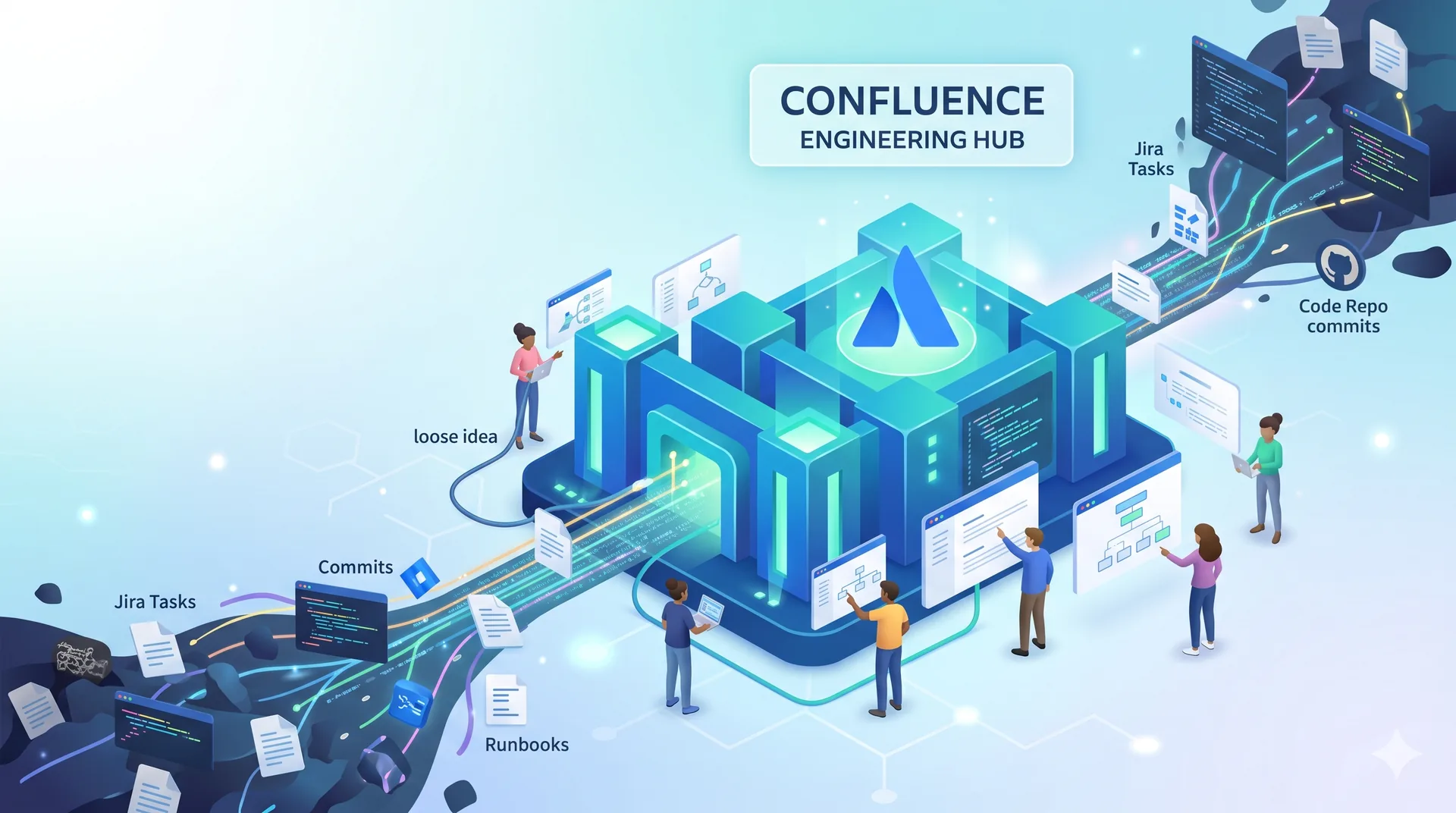
Knowledge management in software engineering teams is one of the most critical factors determining the success or failure of complex projects. While various tools exist for storing information, choosing the right platform can make a massive difference in team scalability. This article explores the Confluence platform deeply, analyzes its internal technical architecture, compares it with personal note-taking tools like OneNote, and provides actionable solutions to overcome cultural documentation challenges.
Confluence is far more than a simple text editor; its underlying infrastructure is built on a hierarchical graph. Relational database tables in the backend store pages as nodes with explicit parent-child relationships, ensuring that workspace isolation and categorization remain structured.
One of the most complex parts of Confluence's architecture is its real-time collaborative editing engine, known as Synchrony. This service uses the WebSocket protocol and advanced state-synchronization algorithms to allow multiple developers to work simultaneously on a single technical document without encountering state conflicts.
Dynamic data sharing is achieved through a macro-based architecture, which shares structural similarities with modern frontend components. Engineers can execute complex queries using the proprietary Confluence Query Language (CQL). For instance, the following query is used to fetch architectural documents within an engineering workspace:
Microsoft OneNote is an excellent digital notebook for personal use or small, non-technical teams, but it fails to scale under the complexities of software engineering. The fundamental differences between these two platforms include:
- Tool integration serves as the primary differentiator; Confluence connects natively and seamlessly with Jira and version control systems like GitHub, whereas OneNote remains a completely isolated data island.
- Native code block support is non-existent in OneNote, leading to broken formatting and a lack of syntax highlighting for pasted code snippets. Confluence, by contrast, provides dedicated code macros supporting dozens of programming languages.
- Version control and revision history in Confluence operate similarly to Git. It tracks exactly who changed which line of an API contract and when, allowing seamless rollbacks—a feature set that is highly limited and opaque in OneNote.
- Scalable search architecture in Confluence allows large organizations to find specific technical insights among thousands of documents within seconds, leveraging structured labeling and CQL.
The greatest bottleneck in most software teams is the lack of time and the general reluctance of engineers to write documentation. This challenge often manifests as a cultural and managerial debt in fast-paced development environments, creating a wide gap compared to global engineering standards.
Continuous pressure to deliver features rapidly in volatile markets often leads management to view time spent on documentation as wasted overhead. Because the output of documentation does not manifest directly as visual features for the end-user, it is frequently marginalized. When developers are forced to reverse-engineer legacy code due to a lack of high-level architectural overviews, the "bus factor" rises to a critical risk level.
While large enterprise organizations utilize specialized technical writers, even they cannot deduce the internal engineering logic behind complex AI models or custom Linux infrastructure without an initial developer draft. Therefore, the engineer remains the primary and best source of truth.
Transforming a team's engineering culture requires practical process changes and demonstrating tangible value to the developers themselves. The following strategies can accelerate this transition:
- Implementing a Docs-as-Code pattern allows developers to update documentation using standard Markdown files stored directly inside the code repository without leaving their preferred local development environment.
- Embedding documentation into the Definition of Done (DoD) ensures that no pull request on GitHub can be merged unless the corresponding documentation is updated or created.
- Leveraging automation tools that parse standardized in-code comments to auto-generate documentation pages drastically reduces the manual overhead imposed on engineers.
- Documenting Architecture Decision Records (ADRs) prior to writing code ensures that the underlying rationale for database selections or microservice designs is permanently preserved.
Cultural transformation cannot be forced through rigid managerial mandates. When team members experience firsthand that robust documentation prevents them from answering repetitive questions, they naturally become the strongest advocates for the process.
Technical Architecture and Internal Structure of Confluence
Confluence is far more than a simple text editor; its underlying infrastructure is built on a hierarchical graph. Relational database tables in the backend store pages as nodes with explicit parent-child relationships, ensuring that workspace isolation and categorization remain structured.
One of the most complex parts of Confluence's architecture is its real-time collaborative editing engine, known as Synchrony. This service uses the WebSocket protocol and advanced state-synchronization algorithms to allow multiple developers to work simultaneously on a single technical document without encountering state conflicts.
Dynamic data sharing is achieved through a macro-based architecture, which shares structural similarities with modern frontend components. Engineers can execute complex queries using the proprietary Confluence Query Language (CQL). For instance, the following query is used to fetch architectural documents within an engineering workspace:
GET /rest/api/content/search?cql=space=ENG and label=architectureWhy OneNote Fails to Meet Software Engineering Needs
Microsoft OneNote is an excellent digital notebook for personal use or small, non-technical teams, but it fails to scale under the complexities of software engineering. The fundamental differences between these two platforms include:
- Tool integration serves as the primary differentiator; Confluence connects natively and seamlessly with Jira and version control systems like GitHub, whereas OneNote remains a completely isolated data island.
- Native code block support is non-existent in OneNote, leading to broken formatting and a lack of syntax highlighting for pasted code snippets. Confluence, by contrast, provides dedicated code macros supporting dozens of programming languages.
- Version control and revision history in Confluence operate similarly to Git. It tracks exactly who changed which line of an API contract and when, allowing seamless rollbacks—a feature set that is highly limited and opaque in OneNote.
- Scalable search architecture in Confluence allows large organizations to find specific technical insights among thousands of documents within seconds, leveraging structured labeling and CQL.
Root Causes of the Documentation Deficit in Tech Ecosystems
The greatest bottleneck in most software teams is the lack of time and the general reluctance of engineers to write documentation. This challenge often manifests as a cultural and managerial debt in fast-paced development environments, creating a wide gap compared to global engineering standards.
Continuous pressure to deliver features rapidly in volatile markets often leads management to view time spent on documentation as wasted overhead. Because the output of documentation does not manifest directly as visual features for the end-user, it is frequently marginalized. When developers are forced to reverse-engineer legacy code due to a lack of high-level architectural overviews, the "bus factor" rises to a critical risk level.
While large enterprise organizations utilize specialized technical writers, even they cannot deduce the internal engineering logic behind complex AI models or custom Linux infrastructure without an initial developer draft. Therefore, the engineer remains the primary and best source of truth.
Actionable Solutions to Foster a Documentation Culture
Transforming a team's engineering culture requires practical process changes and demonstrating tangible value to the developers themselves. The following strategies can accelerate this transition:
- Implementing a Docs-as-Code pattern allows developers to update documentation using standard Markdown files stored directly inside the code repository without leaving their preferred local development environment.
- Embedding documentation into the Definition of Done (DoD) ensures that no pull request on GitHub can be merged unless the corresponding documentation is updated or created.
- Leveraging automation tools that parse standardized in-code comments to auto-generate documentation pages drastically reduces the manual overhead imposed on engineers.
- Documenting Architecture Decision Records (ADRs) prior to writing code ensures that the underlying rationale for database selections or microservice designs is permanently preserved.
Cultural transformation cannot be forced through rigid managerial mandates. When team members experience firsthand that robust documentation prevents them from answering repetitive questions, they naturally become the strongest advocates for the process.